Trekking Grade
Trekking Category
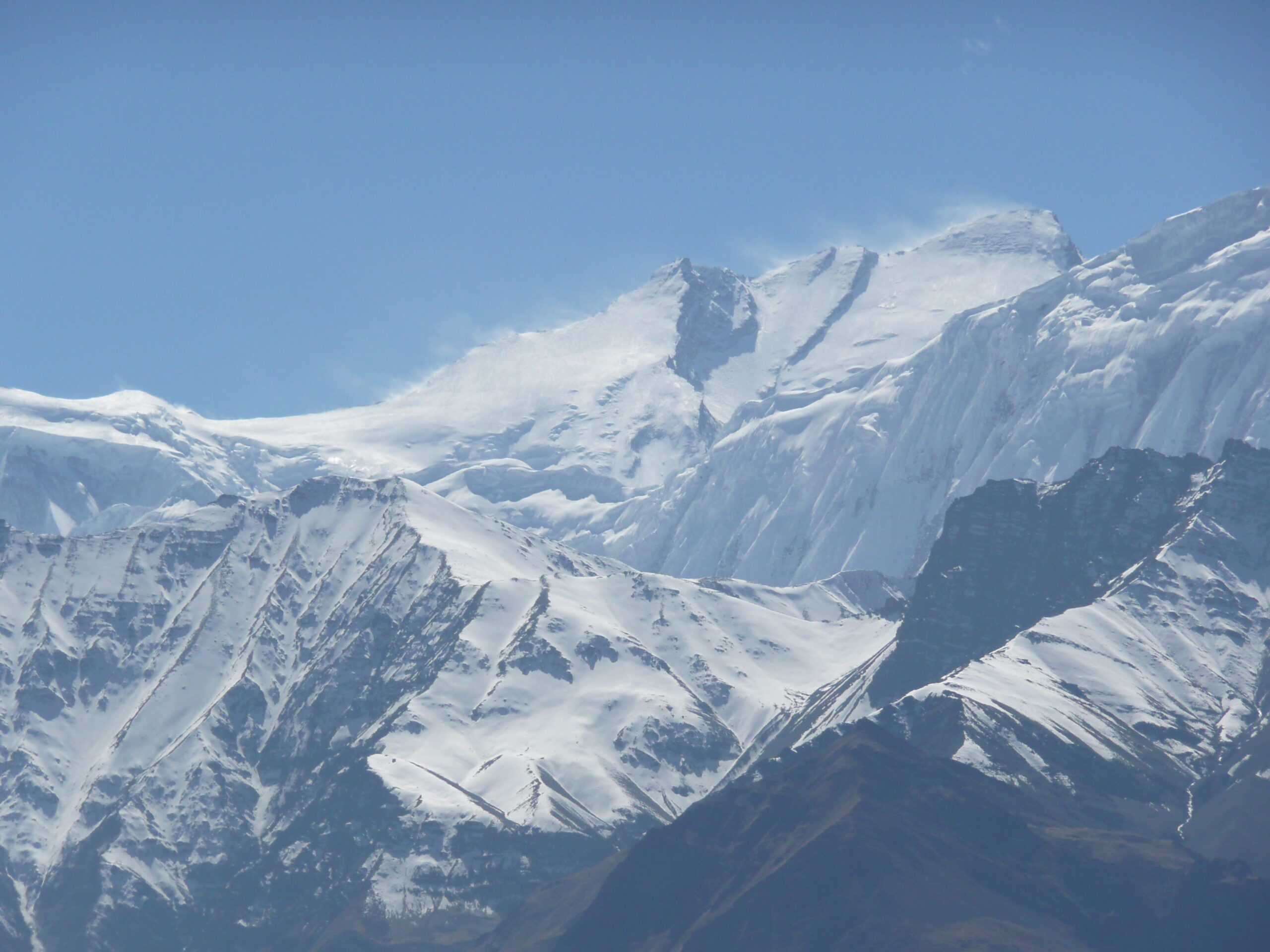
Throughout the trek, you’ll be treated to breathtaking views of iconic peaks, including Mount Everest, Lhotse, Nuptse, Ama Dablam, and many more.The ultimate destination of the trek, Everest Base Camp, allows you to witness the climbers’ preparations for their ascent. It’s an exhilarating experience to be at the foot of the world’s highest peak.Located near Everest Base Camp, Kalapatthar offers an incredible panoramic view of Mount Everest and its surrounding peaks. It’s one of the best viewpoints in the region.
Along the way, you’ll have the opportunity to immerse yourself in the unique Sherpa culture. Visit monasteries, interact with locals, and gain insights into their traditional lifestyle. The trek takes you through the Sagarmatha National Park, a UNESCO World Heritage Site. The park is known for its diverse flora and fauna, including rare species like the snow leopard and red panda. Crossing numerous suspension bridges over roaring rivers adds an adventurous element to the trek. These bridges are essential for connecting the remote villages in the region.
Visit the Tengboche Monastery, one of the most important religious sites in the Khumbu region. The monastery offers a serene and peaceful atmosphere, with stunning mountain views as a backdrop.Trekking through Sherpa villages such as Namche Bazaar, Dingboche, and Lobuche gives you a chance to experience the Sherpa way of life and enjoy their warm hospitality. Pay homage to the climbers who lost their lives on Everest at the Everest Memorial in the village of Thukla. It’s a somber reminder of the challenges and risks involved in mountaineering.
Completing the Everest Base Camp – Kalapatthar trek is an incredible personal achievement. It pushes your physical and mental limits while rewarding you with unforgettable experiences and memories. For more information contact us at info@fairsteptrekking.com .
call us at
Your adventure begins as you land at Tribhuvan International Airport in Kathmandu. As you emerge from the arrivals terminal, a representative from Nepal Fair Step Trek will be there to provide a warm traditional welcome, greeting you with a Garland or Khata as a sign of respect and good fortune. You will then be transferred by private vehicle to your hotel in the heart of the city. After checking in, you can spend the rest of the day relaxing to recover from your flight or taking a gentle walk through the colorful streets of Thamel to experience your first taste of Nepal’s vibrant culture and atmosphere.
Your journey transitions into a deep exploration of the cultural and spiritual heart of the Kathmandu Valley, visiting three of Nepal’s most iconic UNESCO World Heritage Sites. The morning begins at Kathmandu Durbar Square, a historical place where you visit the Living Goddess Kumari and explore ancient palaces. Next, you will travel to the sacred Pashupatinath Temple, the most important Hindu shrine in Nepal. The day concludes at the massive Boudhanath Stupa, a famous world heritage site and Buddhist monument. As you walk clockwise around the dome, the rhythmic chanting of monks and the scent of incense create a peaceful atmosphere, perfectly preparing you for the trek ahead.
Your trekking adventure officially begins as you leave the Kathmandu Valley behind for a long and scenic drive to Syabrubesi. The 145 km journey typically takes between 7 and 9 hours, navigating through winding mountain roads that offer a firsthand look at the diverse landscapes of rural Nepal. As the bus climbs out of the Kathmandu rim, you will be treated to views of terraced emerald-green farmlands and small roadside settlements. Much of the route follows the path of the Trishuli River, known for its turquoise waters and white-water rapids. Along the way, you will pass through several lively towns like Trishuli Bazar and Dhunche, the administrative center of the Rasuwa district and the gateway to the Langtang National Park. As you descend toward the riverside town of Syabrubesi, the air becomes fresher and the massive peaks of the Ganesh Himal begin to appear in the distance.
You finally lace up your boots to begin the foot journey into the heart of the Langtang region. The trek starts with a steady and challenging ascent as you leave the river valley behind, climbing 1,060 meters over a walking time of 5-6 hours. The trail winds upward through lush forests and terraced hillsides, leading you first to the charming village of Khangjim. This segment of the trek offers a wonderful introduction to the local culture, as you pass through traditional Tamang settlements and see ancient mani walls and chortens. The path continues its upward incline toward Sherpa Gau, where you are rewarded with a peaceful atmosphere and authentic mountain hospitality, revealing the deep valleys below and the towering white peaks of the Langtang range above.
The trail continues to lead you deeper into the Langtang Valley as you head toward the settlement of Thyangsyap. Over a walking time of 5-6 hours, you will experience a significant change in the flora, moving from the denser subtropical forests into the sub-alpine zone characterized by rhododendrons, oaks, and majestic hemlocks. The path involves a steady climb of ↑660 m balanced by a minor descent of ↓100 m, making it a moderate yet invigorating day of trekking. As you walk, you’ll parallel the rushing Langtang Khola, and the valley begins to widen, offering dramatic views of the snow-capped peaks ahead. Arriving in Thyangsyap, you cross the 3,000-meter threshold, where the landscape takes on a more rugged, high-altitude character.
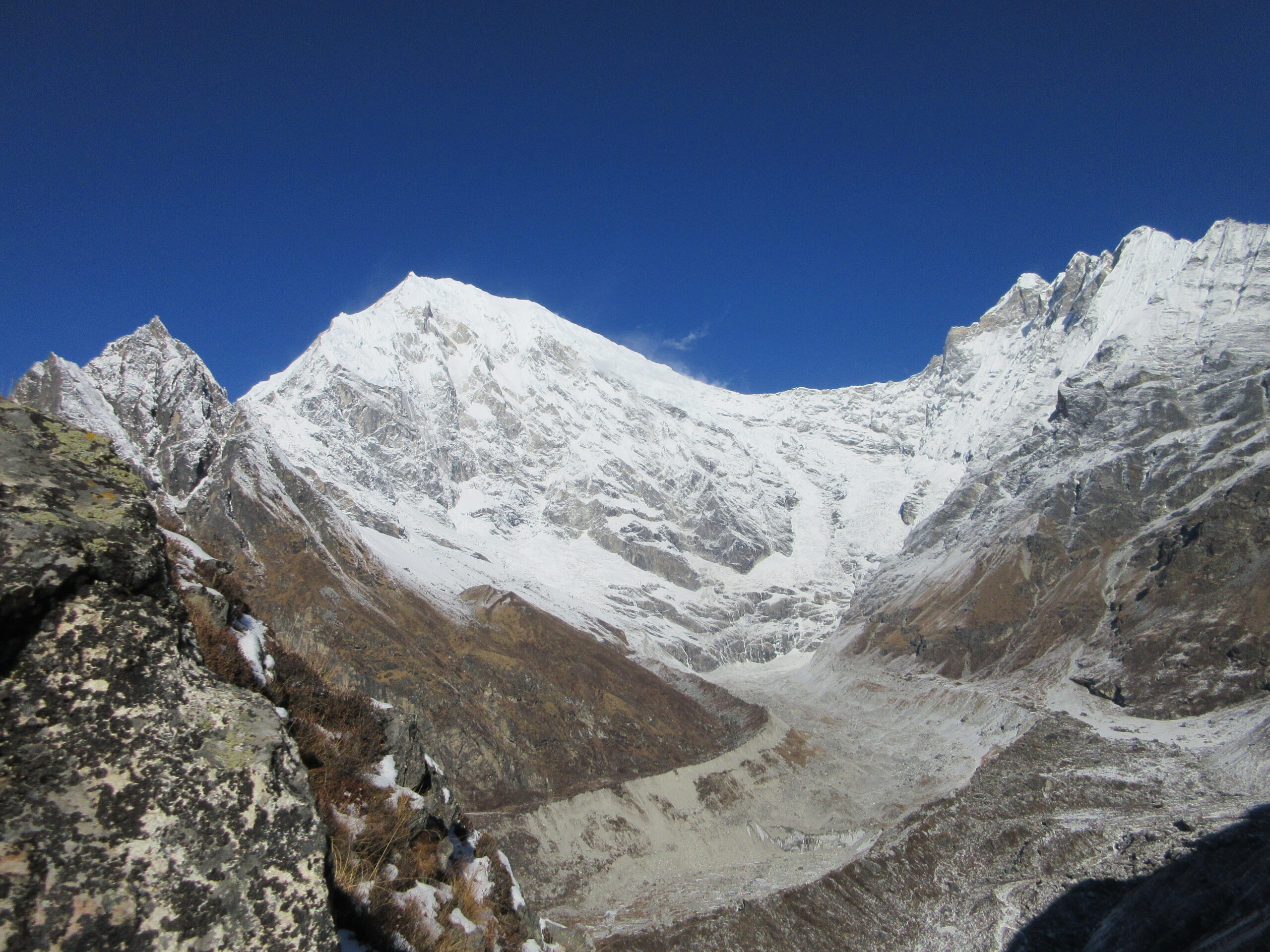
Today you trek toward the final settlement of the valley, the spiritual and geographical heart of the region at Kyangjin Gompa. The trail ascends gradually through wide alpine meadows and past massive mani walls inscribed with Buddhist prayers, with the formidable Langtang Lirung glacier looming to your left. After about 3 hours of walking, you reach the small village famous for its ancient monastery and local yak cheese factory. The adventure continues with an afternoon hike up to Kyangjin Ri peaks. This steep climb rewards you with one of the most spectacular panoramas in the Himalayas, bringing the total walking time to 3-6 hrs with an ascent of ↑690/1260m and a descent of ↓570 m.
You have the opportunity for a crucial acclimatization day, which can be spent resting in the village or taking on the most challenging hike of the trek to the summit of Tshergo Ri. For those choosing the climb, the day involves a walking time of 4-8 hours to tackle a steep gain of ↑1155 m and a corresponding descent of ↓1155 m. The trail winds through rocky moraines and high-altitude pastures, requiring stamina as you approach the nearly 5,000-meter mark. Upon reaching the summit, you are rewarded with an unparalleled 360-degree theater of Himalayan giants, including Langtang Lirung and Yala Peak. After spending time at the top to marvel at the glacial world below, you will descend back to the comfort of Kyangjin Gompa.
You begin your descent from the high alpine sanctuary of Kyangjin Gompa, retracing your steps back down the Langtang Valley toward Lama Hotel. This is a significant day of walking with a time of 6-8 hours as you descend from the glacier-fed heights to the lush green forests below. Although the day is dominated by a long descent, there are short uphill sections totaling an ascent of ↑210 m and a descent of ↓270 m from specific ridges. As you walk, you will see the landscape transform once more—the stark, rocky terrain and vast moraines gradually give way to alpine shrubs and eventually the dense, moss-covered forests of rhododendron and bamboo. Following the rushing Langtang Khola river downstream, you will arrive back at the familiar clearing of Lama Hotel.
You diverge from the previous path to begin the transition toward the Gosaikunda region, heading to the picturesque village of Thula Syabru. This is a demanding day of trekking with a walking time of 7-8 hours, characterized by significant elevation changes including a descent of ↓950m followed by a climb of ↑500m. The trail initially takes you back down along the river through lush forests before the path turns upward, following a steep and winding trail through terraced farm fields and traditional houses. As you ascend, the valley opens up to reveal stunning views of the Ganesh Himal and the mountains of Tibet. Thula Syabru is a large, beautiful village perched on a ridge, known for its unique row-house architecture and ancient traditions.
You begin a challenging but rewarding ascent as you leave the village of Thula Syabru behind and climb toward the high-altitude ridge of Chyolang Pati. This day is defined by a significant and steady elevation gain of ↑1410m, taking a walking time of 6-7 hours. The trail leads you steeply upward through enchanting forests of silver oak, hemlock, and giant rhododendrons. Along the way, you will pass through Sing Gompa, a tranquil settlement famous for its ancient Buddhist monastery and its local yak cheese factory. As you emerge from the treeline near Chyolang Pati, the landscape opens up into dramatic alpine scenery, offering staggering views of the Langtang Lirung, Ganesh Himal, and even the distant peaks of the Annapurna range on a clear day.
You embark on a deeply spiritual and visually stunning climb toward the sacred alpine lakes of Gosaikunda. This walking time of 6 hours involves a steady ascent of ↑860m along a dramatic ridge trail that offers some of the most expansive views of the entire journey. As you climb above the tree line, the panorama widens to include the towering peaks of the Annapurna, Manaslu, and Ganesh Himal ranges. The path leads you through Lauribinayak, a legendary viewpoint where the air grows thin and the landscape becomes a rugged moonscape of rock and low shrubs. As you crest the final ridge, the first of the holy lakes appears, eventually leading you to the shores of the grand Gosaikunda Lake itself, providing a serene and mystical setting for your overnight stay.
You tackle the most physically demanding yet exhilarating day of the trek as you cross the high Lauribina Pass. Leaving the sacred lakes behind, the trail ascends steadily over rocky terrain. For the truly ambitious, there is an optional detour to summit Surya Peak. The total walking time ranges from 7-10 hours with an ascent of ↑260/800m and a significant descent of ↓1200/1735m. After reaching the pass, you begin a long and steep descent into the rugged wilderness of the Helambu region. The trail drops sharply, transitioning from the high-altitude moonscape back into the sub-alpine scrub and rocky caves of Gopte, testing your endurance but leaving you with a profound sense of accomplishment.
You continue your journey through the Helambu region, traveling from the rugged heights of Ghopte to the charming village of Kutmsang. This walking time of 7-8 hours is characterized by a long, steady descent of ↓1220 m, punctuated by short uphill sections totaling an ascent of ↑160m. The trail takes you through a beautiful wilderness of dense rhododendron and bamboo forests, where the moss-covered trees create an enchanting atmosphere. Along the way, you will cross several ridges and pass through Tharepati, a stunning viewpoint that offers a final sweeping look at the Jugal Himal. After descending further through wilderness and scattered summer pastures, you arrive at Kutmsang, a traditional village inhabited by the Hyolmo and Tamang people.
You begin a scenic traverse across the rolling ridges of the Helambu region as you head toward Chisapani. This walking time of 7-8 hours is a beautiful combination of cultural immersion and natural beauty, featuring a moderate ascent of ↑380m and a gradual descent of ↓630 m. The trail winds through lush green hills, passing through several traditional Tamang and Sherpa villages where you can observe daily life. You will hike through dense forests of oak and rhododendron, emerging onto ridges that offer “balcony” views of the Himalayas to the north. As you approach Chisapani, you are rewarded with a spectacular panoramic vista that stretches from the Annapurna range in the west to Mount Everest in the Far East.
You begin the final leg of your trek, journeying from the ridge of Chisapani back toward the Kathmandu Valley. The walking time of 5-6 hours begins with a gentle climb of ↑215 m to reach the Borlang Bhanjayng pass, which serves as the gateway into the national park. From here, you embark on a long and scenic descent of ↓970 m through protected oak and rhododendron forests. The trail eventually follows stone steps down through the village of Mulkharka, offering a bird’s-eye view of the sprawling Kathmandu city. Your foot journey concludes at Sundarijal, where a private vehicle will pick you up for a short drive back to your hotel in Kathmandu for a celebratory farewell dinner.
Your Himalayan adventure comes to an end today. After enjoying a final breakfast at your hotel, you will have some free time for last-minute souvenir shopping in Thamel or a quiet stroll through the city’s vibrant streets. Depending on your flight schedule, a representative from Nepal Fair Step Trek will provide a private transfer to Tribhuvan International Airport. As you head to the terminal, you’ll carry with you the memories of the Langtang glaciers, the sacred waters of Gosaikunda, and the warm hospitality of the mountain people. We wish you a safe journey home.